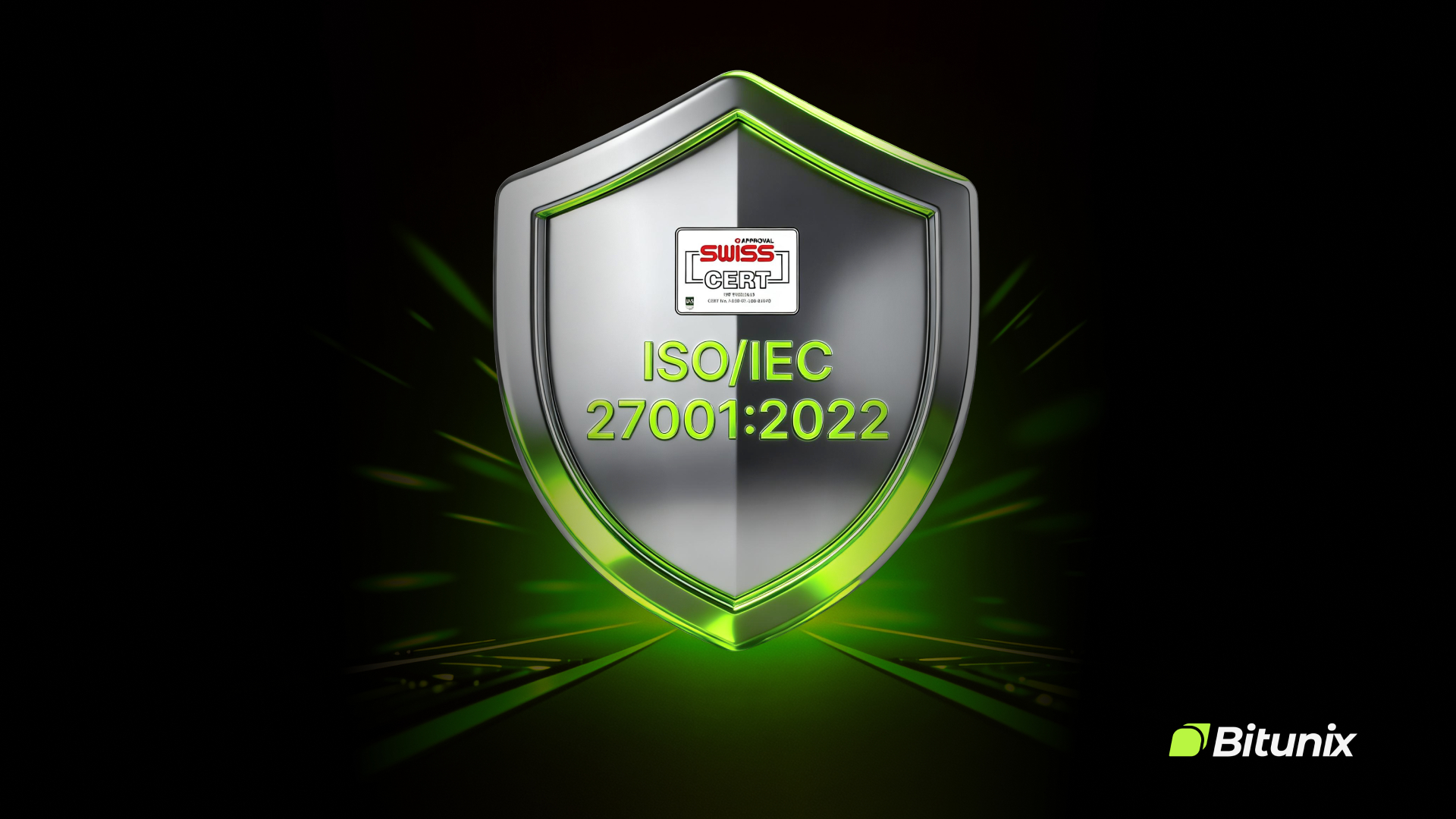
Bitunix, a cryptocurrency derivatives exchange, announced on April 15, 2026 that it obtained ISO 27001:2022 certification. It's a widely recognized international standard for information security management, issued by the International Organization for Standardization. The certification confirms Bitunix has formal systems to manage and protect sensitive data, including user information and assets. That's different from relying on ad hoc or informal security practices.
What the Certification Process Actually Involves
The certification follows an external audit. Auditors evaluate how organizations identify risks, control access, and respond to security incidents. That external piece matters: an independent third party, not Bitunix itself, verified the exchange meets the standard's formal requirements. The company isn't just self-declaring compliance.
What ISO 27001:2022 Actually Requires
The standard sets clear requirements for how companies organize their security practices, from internal procedures to technical safeguards. Exchanges handle large volumes of funds and personal data at once. For them, standards like this are increasingly essential infrastructure, not optional credentials. Security certification has shifted from a differentiator to a baseline expectation across the industry.
What This Means Practically for Bitunix Users
With this achieved, users get stronger protection of personal information and funds. It also means better alignment with international data protection rules and more transparency around how the platform operates. The certification creates a built-in accountability loop too. It doesn't just set a bar once; it requires Bitunix to keep raising it, driving continuous improvement going forward.
What Bitunix's Leadership Said About the Achievement
Steven Gu, Bitunix's Chief Strategy Officer, said achieving ISO/IEC 27001:2022 certification reflects the company's deep commitment to security and transparency. He added that trust is earned through action, not marketing claims alone. That framing treats the certification as verification for claims Bitunix was already making, not a brand-new commitment.
How This Fits Bitunix's Broader Security Setup
Alongside the certification, Bitunix keeps building on its existing security setup. The platform maintains proof of reserves showing more than sufficient backing for user funds. It has also set aside a dedicated $30 million USDC care fund for unexpected situations. These layer multiple protective mechanisms, rather than relying on certification alone.
Why Certification Timing Matters for Exchanges Broadly
Crypto exchanges increasingly compete for institutional and higher-value retail users. Formal security certifications like ISO 27001:2022 work as an independently verifiable differentiator. That's distinct from a platform's own marketing claims about its security. It gives prospective users an external reference point when deciding where to hold funds.
Independently verified security certification like this reflects the same institutional-trust-building approach seen in Bitcoin Suisse's Bermuda regulatory approvals. Both use external, third-party verification to back security and compliance claims, rather than relying purely on self-reported standards.
A comparable case unfolds in Gatbits Crypto Trading Platform: What We Could Verify, worth reading alongside this coverage for the broader context.
Glossary
- ISO/IEC 27001:2022: An international standard for information security management systems, issued by the International Organization for Standardization.
- External audit: An independent, third-party review process used to verify an organization's practices meet a specific standard's requirements.
- Proof of reserves: A verification method letting an exchange demonstrate it holds sufficient assets to cover user balances.
Disclaimer
This piece is intended purely as informational content, not financial or investment advice. Security certifications reduce but do not eliminate platform risk. Confirm current details directly through official Bitunix announcements.